
Design preview: Rendered imagery shows the current Bertonetti design direction. Final details and fit will be confirmed ahead of release.
A high-top preview contains several kinds of visual information at once: the outline of the shoe, the shapes drawn across its upper, the opening around the ankle and the band along the sole. Looking at those elements separately makes a design easier to understand.
This guide uses two views of the Signature High-Top in Navy to show a simple reading sequence. The aim is to understand the illustrated design, without treating its appearance as evidence of finished construction or fit.
1. Read the outline before the details
Start with the outer edge of the shoe. Follow it from the toe, up the lacing area, around the collar and down the heel. Then follow the sole back toward the toe. This outline is the silhouette.
In the Navy preview, the upper rises above the heel into a high collar, while the tongue extends above the laces. The pale sole band forms a strong horizontal line beneath that taller upper. Looking at these large shapes first helps keep the surface pattern from dominating every observation.
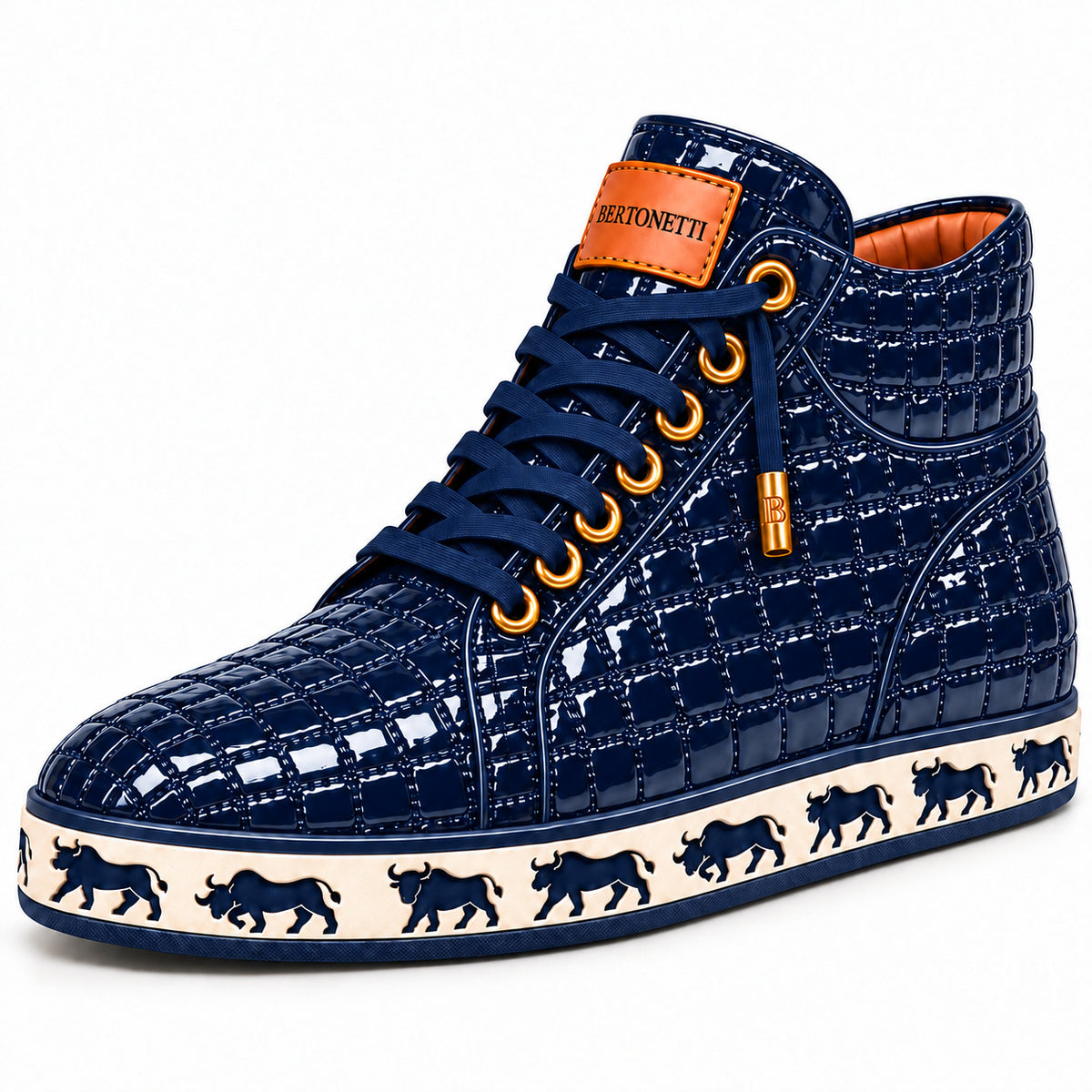
2. Compare the three-quarter and side views
A three-quarter view shows the front and side together. It is useful for seeing how the lacing area sits between the toe and collar, but perspective changes how long and wide those parts appear.
The outer side view makes the toe-to-heel outline easier to follow. In this preview, it also makes the curved line beneath the collar and the outlined heel panel easier to pick out. Use the two views together: one introduces the whole design, while the other clarifies its profile.
These are visual comparisons, not measurements. Images shown at different scales or angles cannot establish shoe length, internal width or collar height in centimeters.
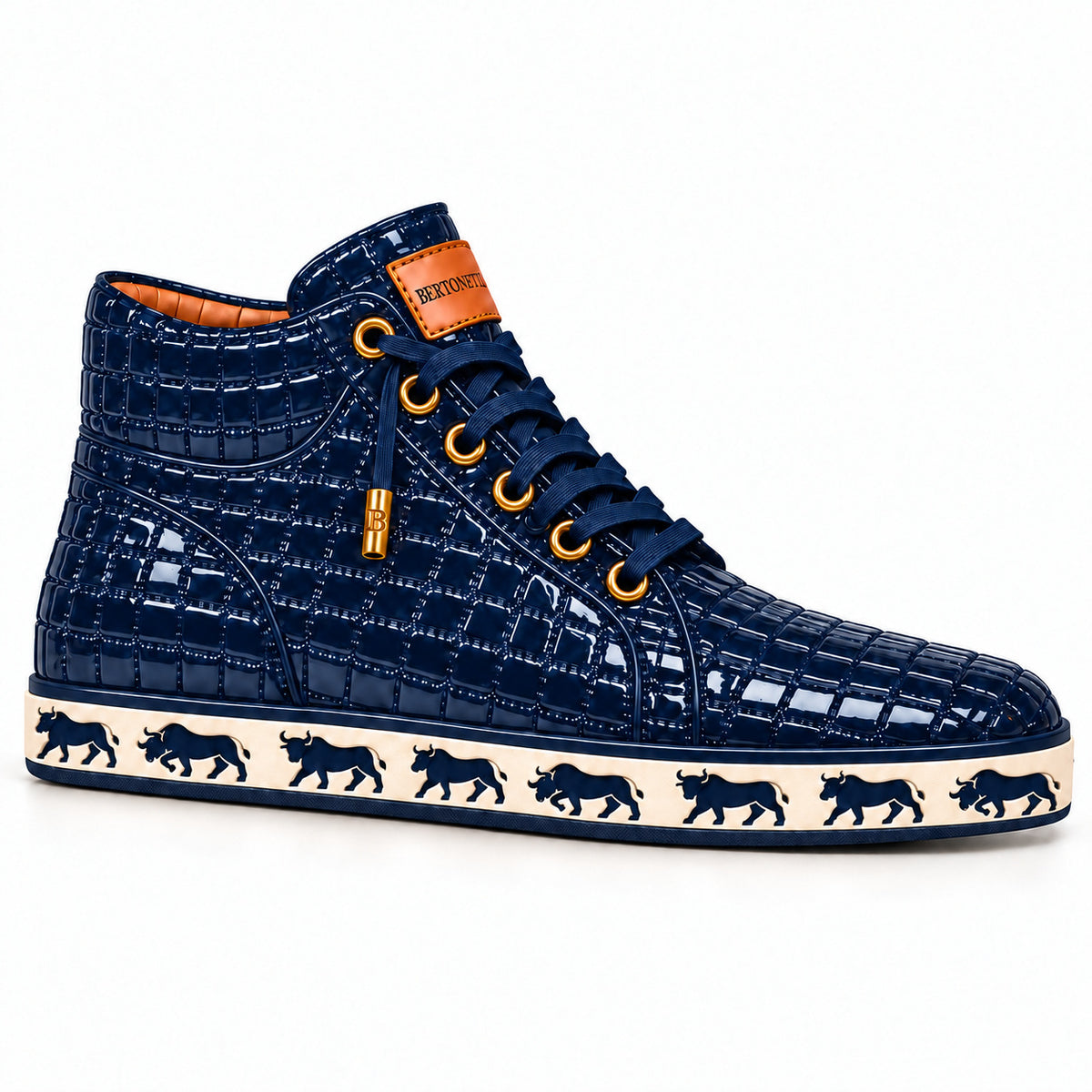
3. Separate panel lines from surface pattern
Look for the larger boundaries around the lacing area, collar and heel. Then compare those boundaries with the smaller repeating pattern across the upper. They operate at different scales: panel outlines divide the design into broad areas, while the repeating surface pattern fills those areas.
A line in an illustration can suggest a seam or panel edge. It does not establish how a finished shoe will be assembled or how that join will perform. Keep the observation precise: describe the line you can see rather than naming an unverified construction method.
4. Follow the collar and the sole band
The collar is the upper edge around the ankle opening. In the Navy preview, an orange-toned interior is visible along that opening, creating contrast with the dark exterior. Its appearance does not establish lining composition, padding thickness or ankle support.
At the bottom of the design, a pale band with repeating dark animal silhouettes separates the navy upper from the dark lower edge. That band contributes to the graphic character of the profile. Its visible depth cannot tell you the internal cushioning, flexibility or grip of a finished sole.
Connect the outline to an outfit plan
After tracing the collar and sole band, decide how much of that outline you would want a trouser hem to reveal. Our high-top color and hem planning guide offers three outfit exercises. Use an existing pair for any physical hem check; a rendered Bertonetti preview cannot establish how your trousers will fall over a finished shoe.
Use the illustrated footwear glossary to identify the parts discussed here. To compare the overall profiles of two footwear types, read high-tops versus chukka boots; neither outline establishes finished fit or performance.
A practical way to compare design previews
- Choose comparable angles. Start with side against side before comparing front and side views.
- Describe one visible feature at a time. Note the outline, panel boundaries, collar opening and sole band separately.
- Keep appearance and specification separate. A rendered surface or edge does not verify material composition or construction.
- Leave fit questions open. A tall collar or broad-looking toe is not evidence of comfort, support or a particular size recommendation.
For the material terminology behind the design, read Gator-Embossed Leather Explained. For the current scope of the previews, see Design & Details. Final specifications and fit guidance will be confirmed ahead of release.
Estimated launch: on or after January 15, 2027. Timing may change. Explore the Signature High-Top design previews, then join the free launch list for release updates. These are concepts in development; paid ordering is not open.